
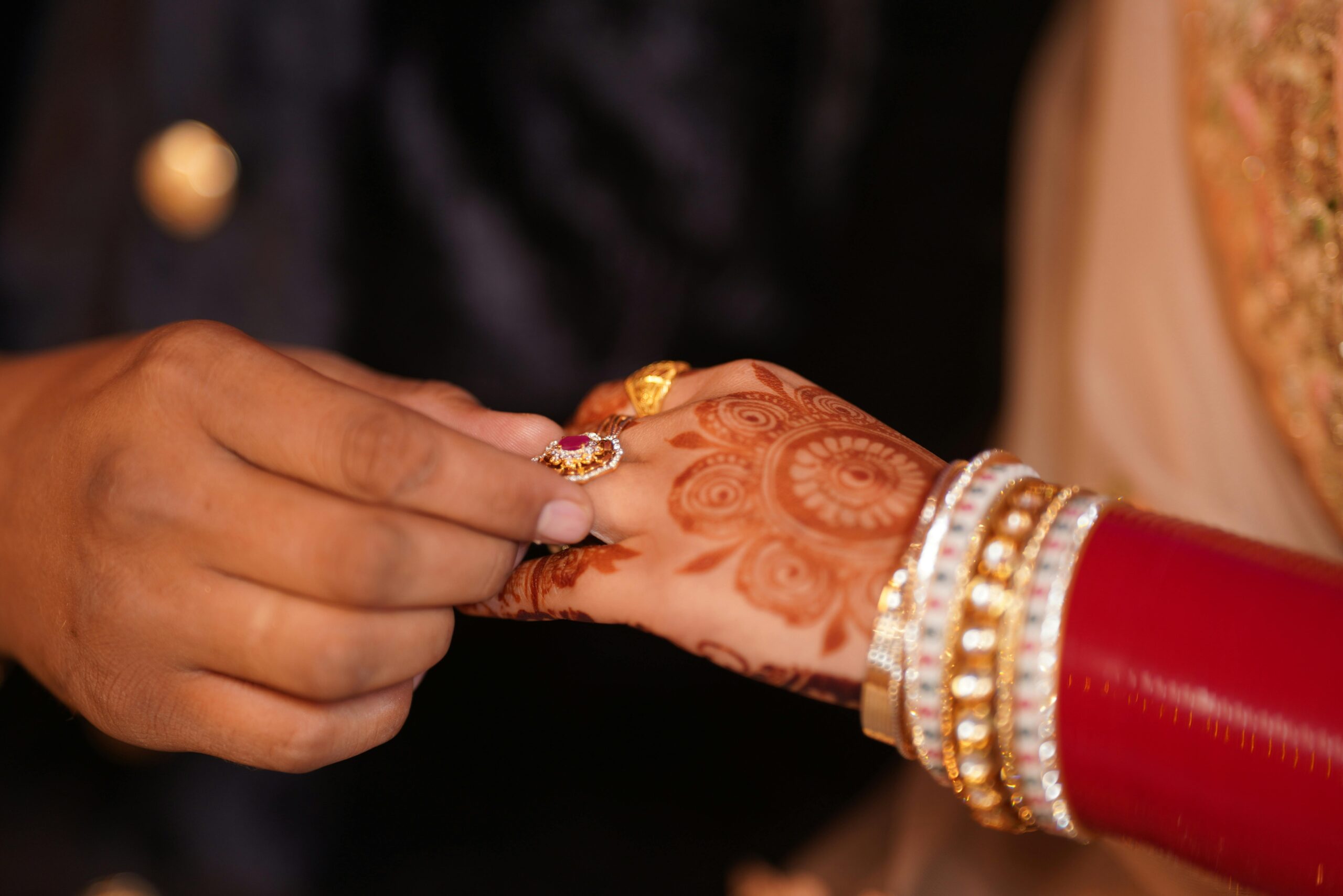
There is something immediately recognisable about a perfect circle. It does not need explanation or translation. It simply feels complete in a way that other shapes often have to work harder to achieve. In jewellery, that sense of completion takes on a quiet emotional weight, especially when it is carried in something as symbolic as an engagement ring.
Round diamond engagement rings have held a consistent place in personal style for generations, not because they are the most dramatic option, but because they tend to feel instinctively right to many people. There is a sense of balance in them that is hard to pin down, yet easy to respond to.
Part of their appeal lies in how unforced they are. They do not rely on unusual geometry or unexpected angles. Instead, they lean into proportion, symmetry, and light. Over time, that simplicity reveals itself to be far more nuanced than it first appears.
Why the Circle Continues to Feel So Meaningful
The circle has carried symbolic meaning across cultures for centuries. It suggests continuity, unity, and cycles that do not end abruptly. While not everyone consciously thinks about symbolism when choosing jewellery, shapes still communicate ideas in quiet ways.
A round diamond does not create visual interruptions. There are no corners to catch the eye or edges to shift attention suddenly. Instead, the gaze moves smoothly around the form. This creates a feeling of ease, almost like visual breathing.
When placed on the hand, that circular motion becomes even more apparent. As the hand moves, the stone seems to turn without ever feeling disjointed. It reflects light consistently from multiple directions, reinforcing that sense of flow.
It is this continuity that often gives round diamond engagement rings their calming presence. They do not demand attention in sharp bursts. They sustain it.
The Relationship Between Cut and Light
One of the most important aspects of a round diamond is how it handles light. The circular shape is not just aesthetic, it is closely tied to how the stone is cut internally.
A round brilliant cut is designed to maximise light return. Inside the stone, facets are arranged in a precise pattern that guides light inward and then back out through the top. This is what creates the familiar sparkle that people often associate with diamonds in general.
But what is less often discussed is the rhythm of that sparkle. It is not constant or flat. It shifts depending on movement, angle, and environment. In bright light, it can feel lively and energetic. In softer light, it becomes more subdued but still present, like a steady glow rather than a flash.
This responsiveness is part of what makes round diamonds feel so dynamic in everyday wear. They change with the day, without ever losing their core identity.
A Shape That Works Across Generations
Round diamond engagement rings have been chosen for decades, yet they rarely feel outdated. Instead, they tend to move through time without losing relevance.
Part of this is due to their neutrality. A round shape does not tie itself to a specific design era. It can appear in highly detailed vintage inspired settings or in very minimal modern designs without feeling out of place.
There is also a certain familiarity that spans generations. Many people first encounter round diamonds in family jewellery, perhaps through a parent or grandparent. That early exposure often shapes how the form is perceived later in life. Even if personal style changes, the round diamond remains recognisable and emotionally anchored.
This continuity between past and present gives it a sense of stability that is rare in fast changing design trends.
How Proportion Changes the Experience
Although the round shape is consistent, subtle differences in proportion can change its overall feel quite significantly.
Some round diamonds are cut to emphasise maximum brilliance. These tend to feel bright, with strong light return and a more energetic sparkle pattern. They draw the eye quickly and hold it through constant movement.
Others may feel slightly softer in their light performance, with a more even distribution of brightness across the surface. These stones can feel calmer, less about individual flashes and more about overall glow.
Even though the shape remains the same, these differences affect mood. One feels more expressive, the other more restrained. Neither is better or worse, but they offer different experiences of the same fundamental form.
The Subtle Role of Setting
While the diamond itself is central, the way it is set also influences how the round shape is perceived.
A minimal setting allows the circular form to remain uninterrupted. The focus stays entirely on the diamond, and its symmetry becomes the dominant feature. In this context, the round shape feels pure and almost architectural in its simplicity.
More detailed settings introduce contrast. Additional elements around the stone can soften or frame the circle, changing how the eye moves across the piece. In some cases, this can enhance the sense of brightness by reflecting additional light. In others, it adds texture that shifts attention slightly away from the centre.
What is interesting is how the round shape adapts so easily to both approaches. It does not lose clarity in complexity, nor does it feel too bare when simplified.
Everyday Light and Quiet Moments
Jewellery is not only experienced in controlled lighting or intentional moments. It is part of daily life, seen in passing reflections, during routine tasks, and in brief glimpses that are not always fully noticed at first.
Round diamonds tend to fit naturally into this kind of environment. Their continuous shape allows light to behave consistently from multiple angles, so they rarely disappear completely, even in low or indirect lighting.
There is something quietly reassuring about that presence. A small flash of light while turning a page. A soft glint while holding a cup near a window. These moments are not dramatic, but they build a sense of familiarity over time.
The ring becomes less about singular moments of attention and more about ongoing companionship within daily rhythm.
Emotional Familiarity Over Time
Initial reactions to jewellery are often visual. Shape, brightness, and detail are what first draw the eye. But over time, emotional familiarity tends to take over.
Round diamond engagement rings often develop this familiarity gradually. The mind becomes accustomed to their symmetry, and the eye begins to recognise their presence without needing to actively search for it.
This creates a kind of visual comfort. The shape feels predictable in the best sense of the word. It does not surprise, but it also does not fade into the background completely.
Instead, it becomes part of how everyday moments are visually structured.
A Shape That Balances Simplicity and Depth
At first glance, the round diamond appears simple. A circle, a consistent sparkle, a familiar outline. But the longer it is observed, the more layers become apparent.
There is precision in its cut, complexity in its light behaviour, and subtle variation in how it interacts with its surroundings. There is also emotional depth in its continuity, shaped as much by memory and association as by physical design.
This balance between simplicity and depth is part of what has allowed it to remain so consistently chosen over time.
The Quiet Confidence of Circular Design
In the end, the appeal of round diamonds is not rooted in novelty. It comes from a steadiness that does not need to be updated or reinterpreted to remain relevant.
They feel resolved without being rigid, bright without being harsh, and familiar without becoming dull.
That combination is not easy to achieve in design, and perhaps that is why it continues to resonate so widely. It reflects a preference for clarity, balance, and forms that feel naturally complete rather than constructed to stand out.
In a world that often moves quickly between styles and trends, there is something quietly grounding about a shape that simply continues to be itself.